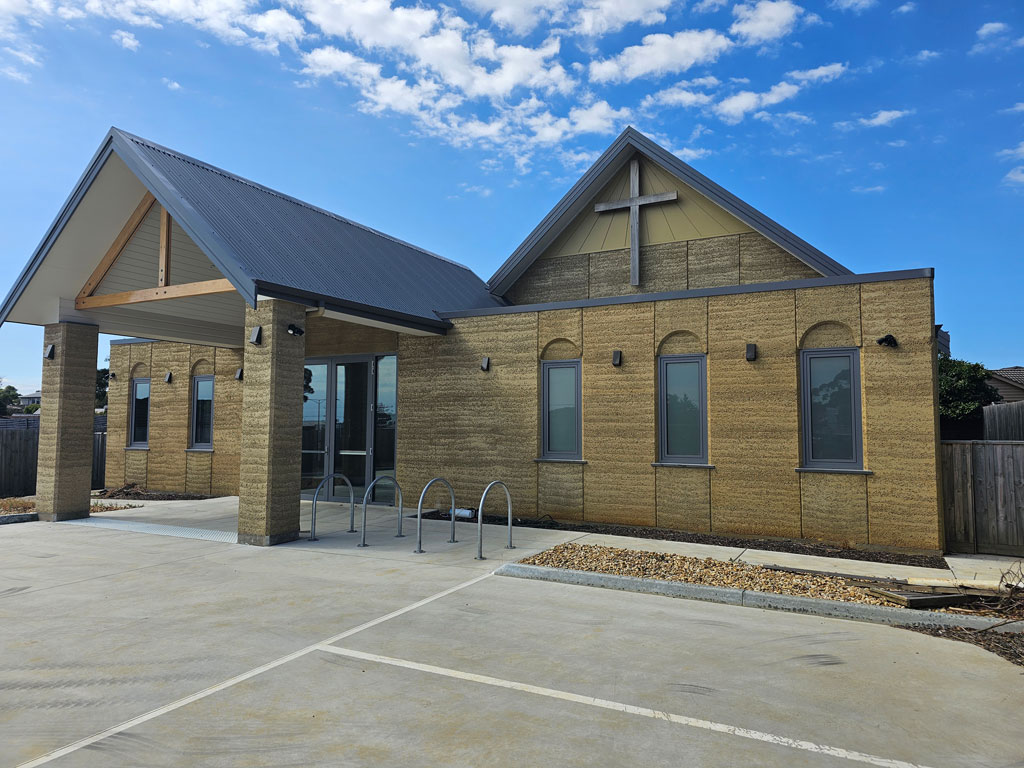
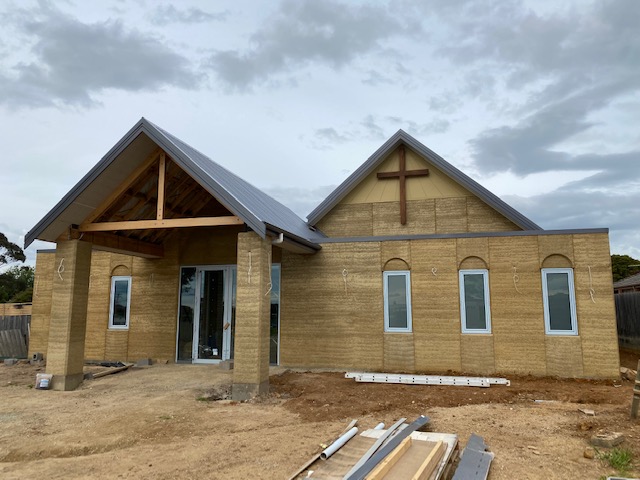
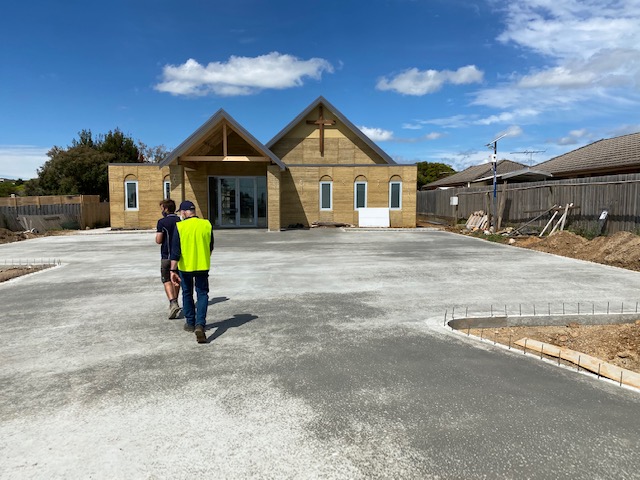
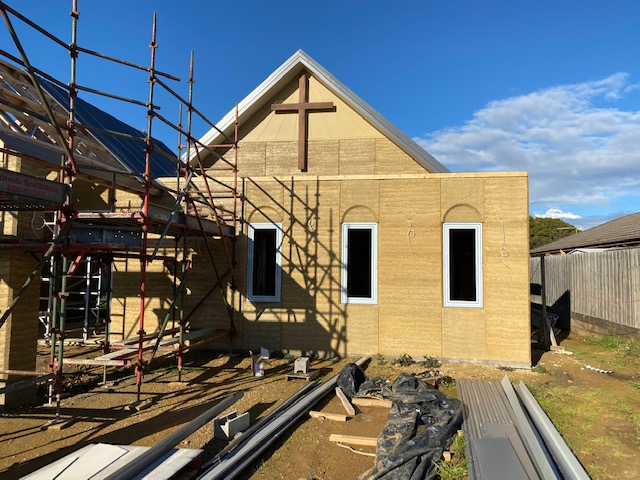
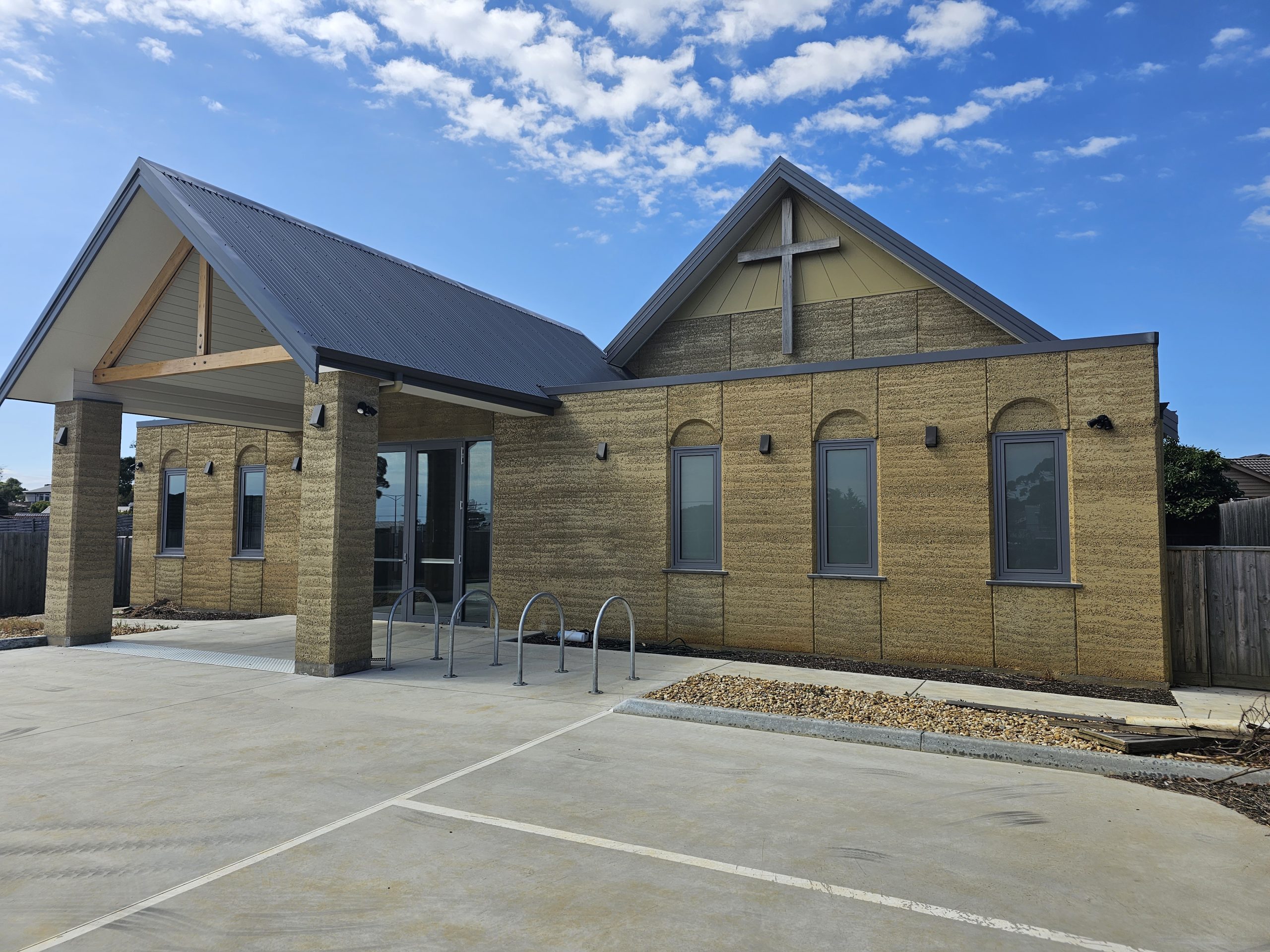
Located on the Nepean Highway in central Mornington, the Mornington Presbyterian Church is a built-for-purpose construction made of traditional materials such as rammed earth and timber. Croft Wootton Construction built the church in 2023, together with Rammed Earth Enterprises, a premium eco-friendly builder based in Castlemaine.
The project was the vision of the late veteran Presbyterian minister Michael Wishart, who sadly passed away in 2018 before construction began. The Dromana Mornington Presbyterian Church held a grand opening ceremony on Saturday, 17 June 2023.
Mornington Presbyterian Church
Designed by architect Steve Hofer, Mornington Presbyterian Church is an unassuming, earthy beige abode showcasing environmentally friendly construction methods.
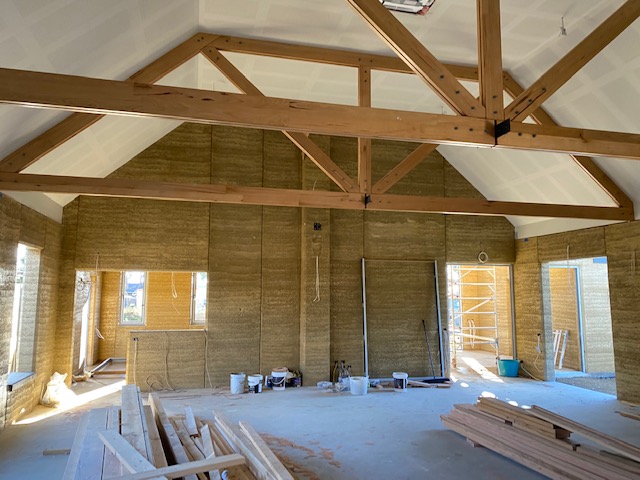
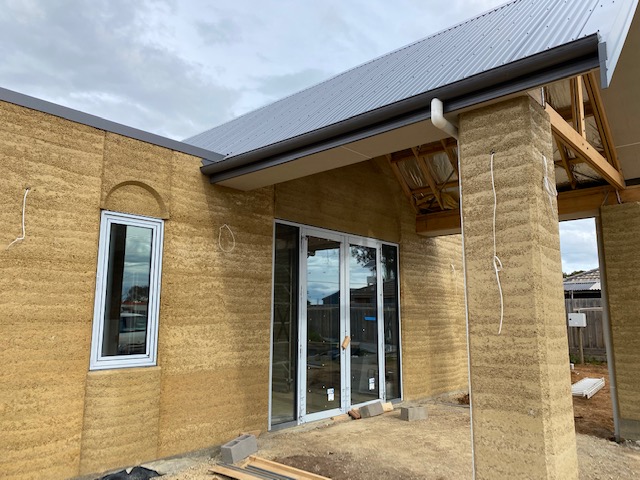
We built the exterior rammed earth walls 300 mm thick to harness thermal mass and maintain a consistent temperature year-round.
Unlike timber frame constructions, building rammed earth walls results in a finished, unalterable product. That means a great deal of planning is required from the beginning of the build. Our team pre-planned every electrical light and powerpoint position, installing fixing points into the walls as they were being erected. To achieve this, we added conduits and cable boxes into the crushed rock, ensuring we could wire cables at a later time.
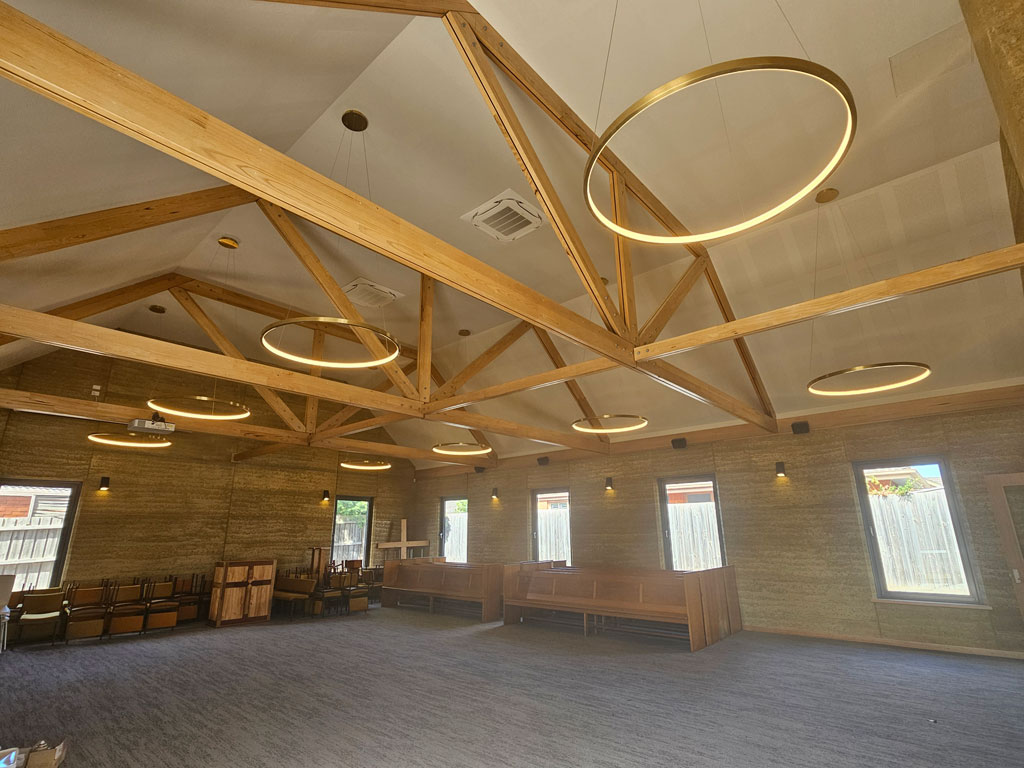
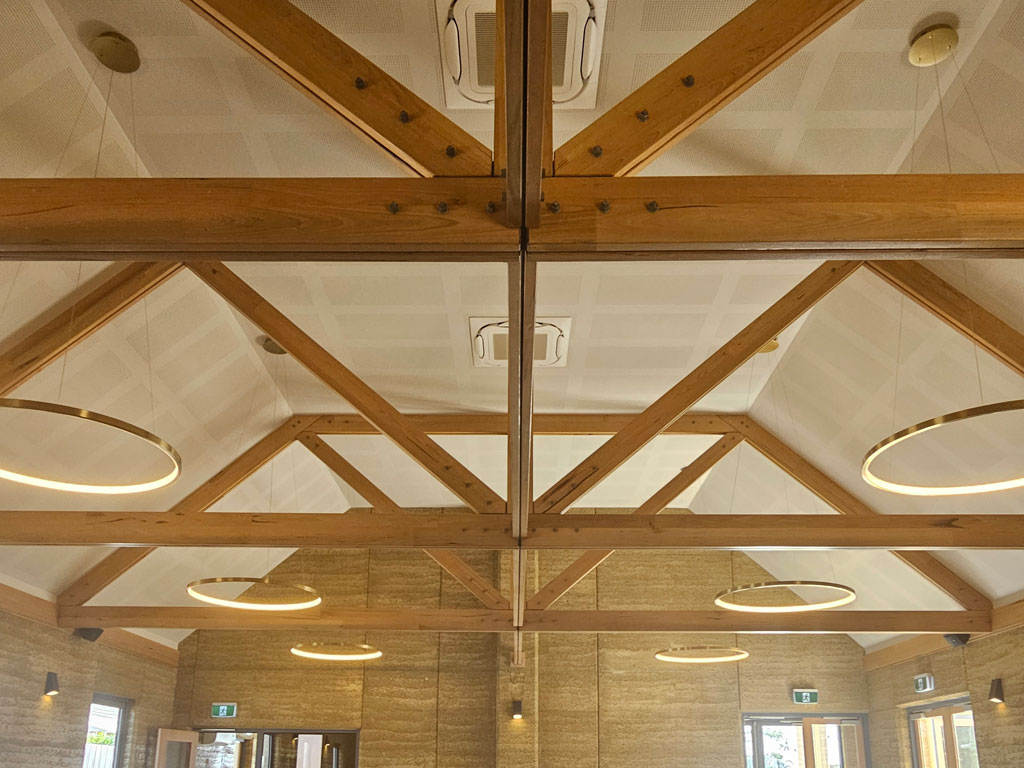
The church interior features a series of rustic, exposed wooden trusses that complement the natural rammed earth aesthetic. We finished the ceiling in the main Sanctuary with perforated plasterboard. When enclosed by rammed earth walls, this material helps absorb sound waves, improving acoustics for choirs and sermons.
Our team sourced rocks locally from Monks Quarry in Langwarrin.
Building With Rammed Earth
Rammed earth is a premium construction method favoured by eco-conscious builders for its superb thermal regulation.
As the name hints, rammed earth is made by compacting, or ramming, a mixture of earthy soil (sand, silt, and clay) together with water. The mixture is laid in layers, which are tamped until they’ve compressed and fully hardened to create a solid structure.
As a high-density, high-specific-heat-capacity material, rammed earth is great at enhancing thermal mass—a material’s natural ability to absorb, store, and release heat. During the day, rammed earth warms up passively from the sun or internal heating systems. The thermal energy stored within is then released into the interior during the cooler evening hours.
As a result, rammed earth effectively regulates temperatures in areas with significant day-night fluctuations, such as the Mornington Peninsula. The material improves comfort and reduces energy expenses in both summer and winter. Builders can achieve even better results by combining rammed earth with the standard principles of passive solar design.
While superb thermal mass is the biggest drawcard, rammed earth offers several other benefits. The earthy, aesthetically pleasing material is durable and long-lasting. Rammed earth structures often stand for centuries and are resilient to bushfires and pests like termites. Once properly sealed, very little maintenance is required. The dense material also offers excellent soundproofing.
On the downside, rammed earth is more expensive than other construction methods. The elevated costs largely come from labour-intensive building methods and specialised expertise. Rammed earth is also challenging to modify—it’s crucial to get things right the first time.